|
|
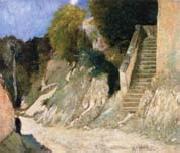 |
Carl Fredrik Hill
|
|
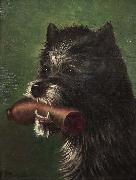
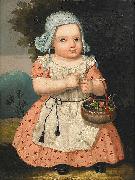
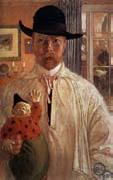
Swedish Painter, 1849-1911,Swedish painter and draughtsman. He grew up in the university city of Lund, where his father was a mathematics professor. Despite severe opposition from his father, he studied landscape painting at the Konstakademi in Stockholm (1871-2), under Johan Edvard Bergh and Per Daniel Holm (1835-1903). He also frequently copied Dutch Old Masters, particularly Jacob van Ruisdael. After seeing the work that Alfred Wahlberg had sent home from Paris, Hill began to abandon his initial approach to form and colour, and he left for Paris in November 1873. His most important experience there was his encounter with the painting of Jean-Baptiste-Camille Corot: 'Corot has discovered a new world, because he has discovered a new way of looking at the old', he wrote in a letter. Other contemporary French painters Hill admired were Alexandre-Gabriel Decamps, Charles-Fran?ois Daubigny, Jean-Franeois Millet and Theodore Rousseau. From Courbet he learnt how to use colour to suggest the surface texture of stone quarries and gravel hills. In Barbizon in 1874 and 1875 Hill met the Hungarian painters Laszlo Pael and Mihaly von Muncacsy. His paintings of this time, for example Autumn Landscape, Evening: Fontainebleau (1875; Malm?, Kstmus.), are characterized by their dark 'luminarism' and their debt to Corot's later works. |
|
|
|
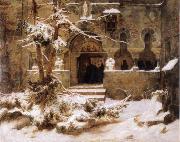 |
Carl Friedrich Lessing
|
|
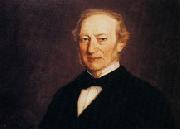
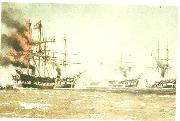
German Painter, 1808-1880,Painter, great-nephew of GOTTHOLD EPHRAIM LESSING. He studied architecture in Berlin at the Kenigliche Bau-Akademie under Karl Friedrich Schinkel, before transferring to the Kunstakademie, where he became a pupil of Wilhelm Schadow in 1825. The next year Lessing followed Schadow to Desseldorf, where the latter had been appointed Director of the Kunstakademie. Almost to the end of his career Lessing was to follow Schadow's rules for a standard series of procedures in the production of a finished work: compositional sketch, oil study, detailed model study, cartoon and underdrawing for the final painting. Without an official position, Lessing worked at the Desseldorf Akademie until 1858 |
|
|
|
|
|
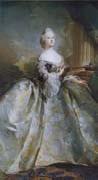 |
Carl Gustaf Pilo
|
|
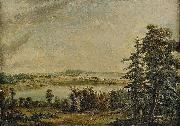
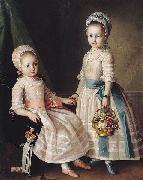
Swedish Painter, 1711-1793,Swedish painter. His father, Olof Pijhlou (1668-1753), was an artist. Pilo may have travelled to Vienna and Germany, and it is probable that he studied at the Drawing Academy established in Stockholm in 1735. From 1737 he was engaged as a portrait painter by members of the southern Swedish aristocracy (e.g. Baron Malte Ramel; evedskloster, priv. col.). About 1740 he settled in Copenhagen, where he swiftly rose to a position of importance: following the enthusiastic reception of his portrait of Louise of England, the wife of the future Frederick V (Copenhagen, Stat. Mus. Kst, on loan to Amalienborg Castle), he was appointed court painter in 1745 and drawing-master to Crown Prince Christian (later Christian VII) in 1759. Pilo was appointed professor at the Royal Academy of Art in Copenhagen in 1748 and for the next two decades was recognized as the foremost portrait painter in Denmark. |
|
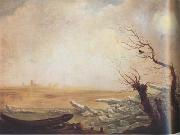 |
Carl Gustav Carus
|
|
German Romantic Painter, 1789-1869
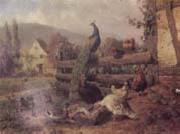
German painter and draughtsman. As well as being an artist, he achieved considerable success as a doctor, a naturalist, a scientist and a psychologist. As an artist, he was concerned almost exclusively with landscape painting, although he never practised it professionally. While still at school in Leipzig, he had drawing lessons from Julius Diez; he subsequently studied under Johann Veit Schnorr von Carolsfeld (1764-1841) at the Oeser drawing academy. From 1813 he taught himself oil painting, copying after the Dresden landscape painter Johann Christian Klengel, whom he visited in his studio. In 1811 after six years at university he graduated as a doctor of medicine and a doctor of philosophy. |
|
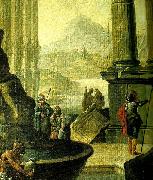 |
carl gustav pilo
|
|
Carl Gustaf Pilo, konstnär, målare, född 1711 i Nyköping, död 2 mars 1793 i Stockholm
Han studerade vid Konstakademien och för Arenius samt vidare i Tyskland. År 1740 till 1772 bosatt i Danmark, där han utnämndes till hovmålare, professor och direktör för akademien. I Danmark utförde han ett antal porträtt bl.a. av Fredrik V och Juliana Maria samt de kungliga barnen.
Efter Gustav III:s statskupp år 1772 blev man i Danmark avogt inställd mot svenskar och Pilo blev helt enkelt tvungen att fly till Sverige. Han bosatte sig i sin barndomsstad Nyköping. Gustav III sökte upp honom med uppdraget, att måla kungens kröning. Pilo försökte avsäga sig det, för han hade ju faktiskt inte varit med vid kröningen och han hade aldrig tidigare målat en gruppbild. Men kungen var envis och han ville ha en motsvarande målning till Ehrenstrahls på Drottningholm av Karl XI:s kröning och Gustav III ville att Pilo skulle måla den. Pilo antog till slut uppdraget och 1782 till 1793 arbetade han med tavlan , utan att bli helt färdig, vilket man ser om man studerar den noga där man på flera ställen på målningen upptäcker flera dubbla ansikten. Dessutom experimenterade Pilo med asfaltsfärg, vilket gör att tavlan uppvisar många större sprickbildningar.
Tavlan Gustav III:s kröning hänger på Nationalmuseum och är Pilos kanske yppersta arbete och en pärla i svensk konst. Kompositionen är väl avvägd, koloriten glänsande harmonisk samt de individuella porträtten är briljant utförda.
Pilo bör räknas till våra främsta målare och var särskilt skicklig som kolorist, där man ser spår och inflytande från den venetianska skolan och från Rembrandt. Många av hans tavlor utstrålar festivitas detta gäller framförallt den stora kröningstavlan. Pilos betydelse i svensk konsthistoria kan också utläsas i att Postverket vid tre tillfällen använt målningar av P. som motiv vid frimärksutgivning. Bl a utgavs till Pilos 250-årsdag en detalj ur kröningstavlan.
Även två av Pilos bröder var också konstnärer, dock med mindre framgång, Jöns Pilo (1707-?) och Olof Pilo (1718-1795). |
|
 |
Carl Haag
|
|
1820 - 1915
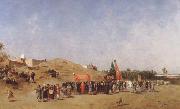
German painter, active in Britain. After studying in Nuremberg, he painted miniature portraits in Munich and Brussels. In 1847 he went to London to study English techniques of watercolour painting and evolved a method that he claimed achieved the 'brilliancy of oil painting, combined with the tender-sweetness of water-colours' . From 1850 he exhibited at the Society of Painters in Water-Colours and was elected a full member in 1853. |
|
 |
Carl Heinrich Bloch
|
|
(May 23, 1834 C February 22, 1890) was a Danish painter.
He was born in Copenhagen and studied with Wilhelm Marstrand at the Royal Danish Academy of Art (Det Kongelige Danske Kunstakademi) there.
His early work featured rural scenes from everyday life. From 1859 to 1866, Bloch lived in Italy, and this period was important for the development of his historical style.
His first great success was the exhibition of his "Prometheus Unbound" in Copenhagen in 1865. After the death of Marstrand, he finished the decoration of the ceremonial hall at the University of Copenhagen.
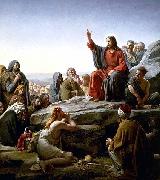
He was then commissioned to produce 23 paintings for the Chapel at Frederiksborg Palace. These were all scenes from the life of Christ which have become very popular as illustrations. The originals, painted between 1865 and 1879, are still at Frederiksborg Palace. |
|
|
|
 |
Carl Hubner
|
|
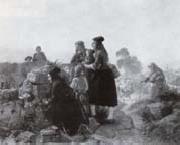
1814-1879, was a German genre painter. He was born at Konigsberg, and was a pupil of the Dusseldorf Academy. Hubner's works were especially popular in Holland and in North America, where he was received with enthusiasm in 1874. |
|
 |
Carl Johan Fahlcrantz
|
|
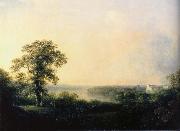
Swedish, 1774-1861, Swedish painter. He began his artistic training in Stockholm as a pupil of the theatre painters J. G. Brusell and E. Limnell (1764-1861). He also studied under the French landscape painter Louis Belanger (1736-1816). In 1805 he was awarded a scholarship to go to Italy, but he preferred to use it to travel within Sweden, as this corresponded more with his interest in painting his native landscape in a National Romantic style. Fahlcrantz settled permanently in Sweden, never travelling outside the Nordic countries. In 1819 he became a professor at the Royal Academy of Arts in Stockholm and in the 1820s Karl XIV commissioned a series of major works from him. Oscar I followed suit, as did numerous other buyers inside and outside Sweden. In this way, Fahlcrantz's paintings were distributed as far as Denmark, Bavaria, Russia and America. |
|
|
|
|
|
|
|
 |
Carl Joseph Begas
|
|
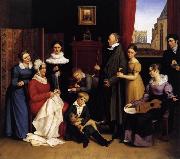
Carl Joseph Begas (September 30, 1794 - November 24, 1854), was a German historical painter born at Heinsberg near Aachen. His father, a retired judge, destined him for the legal profession, but the boy's tastes pointed definitely in another direction. Even at school he was remarked for his wonderful skill in drawing and painting, and in 1812 he was permitted to visit Paris in order to perfect himself in his art.
He studied for eighteen months in the atelier of Antoine Jean Gros then began to work independently. In 1814 his copy of The Madonna della Sedia was bought by the king of Prussia, who was attracted by the young artist and did much to advance him. He was engaged to paint several large Biblical pictures, and in 1825, after his return from Italy, continued to produce paintings which were placed in the churches of Berlin and Potsdam. Some of these were historical pieces, but the majority were representations of Scriptural incidents. Begas was also celebrated as a portrait-painter, and supplied to the royal gallery a long series of portraits of eminent Prussian men of letters. At his death he held the post of court painter at Berlin.
|
|
 |
Carl jun. Oesterley
|
|
(January 23, 1839 - December 16, 1930) was a German landscape painter who was a native of Göttingen. He was the son of painter Carl Friedrich Wilhelm Oesterley (1805-1891).
He attended classes at the Polytechnikum in Hannover and, beginning 1857, at the Kunstakademie (Art Academy) in Dusseldorf where he studied religious painting under Ernst Deger. During a visit to Lebeck in 1865, where he copied Hans Memling's Passion, he made some attempts at architectural and landscape painting. These turned out so well that from then on he dedicated himself to landscape painting. Beginning in 1870 he focused his artistic efforts mainly on Norwegian landscapes, for which he devoted several study trips. He lived in Hamburg and received a first-class medal from the Menchener Ausstellung.
|
|
|
|
 |
carl kylberg
|
|
Carl Oscar Kylberg, född 23 september 1878 på Vasängen i Fridene församling, död 6 januari 1952 i Stockholm, svensk konstnär och representant för Göteborgskoloristerna.
Carl Kylberg var son till kontorschef Gustaf Kylberg och friherrinnan Eleonora von Essen och storebror till konstnären Erik Kylberg. Hans fastrar och farbror var konstnärerna Regina Kylberg-Bobeck, Marina Kylberg och Hjalmar Kylberg. Farfadern Lars Wilhelm Kylberg var konstnär vid sidan av lantbruket på familjegodset Såtenäs i Västergötland.
Kylberg studerade först vid tekniska skolan i Stockholm och i Berlin för att bli arkitekt men övergick till måleri omkring 1900. Han studerade under en tid vid Valand i Göteborg som elev till Carl Wilhelmson. Hans verk kännetecknas ofta av ett glödande oljemåleri med starka färger och han avbildade ofta landskap och figurkompositioner på ett avskalat man??r. Under senare delen av sitt konstnärskap skapade han en mängd religiösa motiv.
Kring 1930-talet fick han sitt genombrott och han kom att ställa ut, förutom i Sverige även i Köpenhamn, Paris, London, Budapest och i USA men hans måleri var för många provocerande och 1938 gick regeringen in och stoppade ett köp av målningen Uppbrottet för Nationalmuseum i Stockholm.
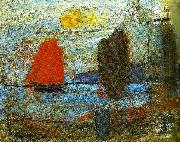
En av hans mest välkända målningar är Hemkomsten från 1938 som hänger på Göteborgs konstmuseum och som föreställer ett skepp i silhuett mot en nästan brinnande gul himmel och ett rödfärgat hav. Denna målning förevigades också 1978 på ett svenskt frimärke av valören 90 öre.
Sedan 1980-talet har många av hans tavlor sålts för rekordpriser vid olika internationella konstauktioner.
|
|
 |
Carl Larsson
|
|
Swedish Realist Painter, 1853-1919
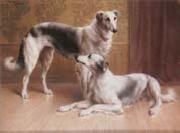
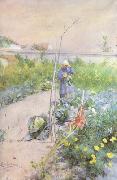
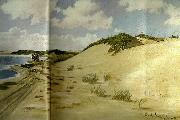
Swedish painter, illustrator and printmaker. He came from a poor family and studied (1866-76) at the Konstakademi in Stockholm, supporting himself throughout this period. From 1871 to 1878 he contributed illustrations to the comic journal Kaspar and the Ny illustrerad tidning. From 1875, for several decades, he was a prolific book illustrator, his most renowned work in this field being his drawings for Föltskärns beröttelser ('The Barber-surgeon's tales'; pubd 1883-4) by Zacharius Topelius, and the Rococo-inspired watercolours for the Samlade skaldeförsök ('Collected attempts at poetry'; pubd 1884) by the 18th-century Swedish author Anna Maria Lenngren. |
|
 |
carl locher
|
|
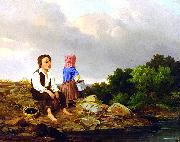
(1851-1915) was a Danish realist painter who from an early age became a member of the Skagen group of painters.
Even before he began his studies at the Royal Danish Academy of Art in 1872, he was encouraged by Holger Drachmann to spend a couple of months in Skagen, the artists colony in the far north of Jutland. He quickly completed paintings of the beach, some with fishing boats or wrecks. He also became interested in the horse-drawn carriage which travelled along the beach on its journey from Frederikshavn.
In the 1870s, Locher continued his studies in Paris but he visited Skagen whenever he was back in Denmark. Ultimately he had a house built there where he lived until his death. |
|
 |
Carl Ludwig Brandt
|
|
(22 September 1831 Holstein, Germany - 1905) was a German-born artist who worked mostly in the United States.
Brandt was born near Hamburg, in Holstein, Germany. His father and grandfather were physicians in Hamburg. His father taught him drawing at the age of seven, and he subsequently studied in the principal galleries of Europe. He served in the First War of Schleswig (1848-1850), between Germany and Denmark.
He came to the United States in 1852. He painted several portraits previous to 1864, and in that year built his studio in Hastings-on-Hudson, New York, but lived in Europe from 1865 until 1869. He was chosen a national academician in 1872, and in 1883 was elected first director of the Telfair Academy of Arts and Sciences, Savannah, Georgia, where he resided in winter. At Telfair he offered art instruction and oversaw art acquisitions, including plaster casts, thus transforming a family mansion into a cultural institution.
|
|
|
|
 |
Carl Nebel
|
|
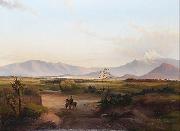
Carl/Carlos Nebel (March 18, 1805 - June 4, 1855) was a German engineer, architect and draughtsman, best known for his detailed paintings of the Mexican landscape and people and of the battles of the Mexican-American War.
Nebel was born at Altona, today a part of Hamburg. After studies in Hamburg and Paris, he travelled to America, where he was a resident of Mexico from 1829 until 1834. In 1836, he published in Paris his renowned illustrated work on that country-Voyage pittoresque et archeologique dans la partie la plus interessante du Mexique, with 50 lithographs made from his paintings, twenty of which were hand-colorized, and an introduction written by Alexander Humboldt. |
|
|
|
|
|
 |
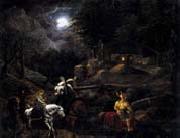
Carl Oscar Borg
|
|
Swedish-born American Sculptor, 1879-1947
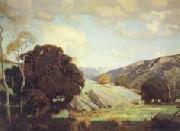
was a Swedish painter who emigrated to the United States around 1900. Borg was influenced by the nature of Arizona and New Mexico, and his works were widespread in American galleries. Borg was a founding member of the Painter's Club of Los Angeles and the California Art Club. |
|
 |
Carl Philipp Fohr
|
|
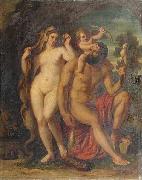
German, 1795-1818,German painter and draughtsman. His first drawing lessons, from the age of 13, were from Friedrich Rottmann (1768-1816), the father of the painter Carl Rottmann. In 1810 the Darmstadt Court Councillor, Georg Wilhelm Issel, discovered Fohr sketching at Stift Neuberg near Heidelberg and, the following year, invited him to Darmstadt and provided encouragement and financial support. From 1813 Fohr carried out commissions for Grand Duchess Wilhelmina of Hesse, for whom he produced a Sketchbook of the Neckar Region, a collection of views and historical subjects (30 watercolours; 1813-14) and also a Baden Sketchbook (30 watercolours, 1814-15; both Darmstadt, Hess. Landesmus.). These far surpassed the usual level attained in this genre in their sharpness of detail, delicacy of colour and pictorial inventiveness. The Crown Princess granted him an annual pension of 500 guilders. From July 1815 to May 1816, Fohr was a student of landscape painting at the Kunstakademie in Munich. |
|
 |
Carl Rahl
|
|
Carl Rahl, sometimes spelled Karl Rahl (13 August 1812 - 9 July 1865), was an Austrian painter.
Rahl was born in Vienna to Carl Heinrich Rahl (1779 - 1843), an engraver. He attended the Academy of Fine Arts Vienna and won a prize at the age of 19. From there he traveled to Munich, Stuttgart, Hungary, and in 1836 to Italy. He remained in Italy from 1836 to 1843, where he in particular studied representatives of the Venetian and Roman schools of art, and painted die Auffindung von Manfreds Leiche (1836).
Rahl's style, especially his views on color and perspective, were largely formed during his years in Rome. He returned after 1843 to Vienna for two years, and then led an itinerant life for the next five years, traveling through Holstein, Paris, Rome, Copenhagen, and Munich, making a living as a portrait painter. In this period he painted Manfreds Einzug in Luceria (1846), and die Christenverfolgung in den Katakomben.
In 1850, he was appointed professor at the Academy of Fine Arts Vienna, but for political reasons he was soon dismissed from the position. He then opened a private art school, which expanded quickly into a studio that produced monumental-scale paintings and enjoyed considerable success. He was commissioned by Greek philanthropist Simon Sinas to paint a number of works for the facade and vestibule of Vienna's Fleischmarkt Greek Church (Ludwig Thiersch being commissioned for the remainder of the frescoes), which was then being rebuilt by architect Theophil Freiherr von Hansen. In addition, Sinas commissioned four paintings depicting heroes of the Greek War of Independence, and a further four paintings to decorate his residence.
Rahl decorated the Heinrichshof in 1861 with personifications of Art, Friendship, and Culture, and the Palais Todesco with representations from the mythology of Paris. In 1864, he painted a number of allegorical figures in the stairway of the Waffenmuseum (now part of the Kunsthistorisches Museum). In this period he also painted several frescoes: Mädchen aus der Fremde (in a villa of Gmunden), a composition for a ballroom of a palace in Oldenburg, and a cycle from the tale of the Argonauts. Also, he painted the tympanum of the Athens Academy building, designed by Theophil von Hansen in 1859 and executed by Ernst Ziller (completed in 1885), and paintings in the portico of the Athens university, designed by Christian Hansen (Theophil Hansen's son). The central painting show Bavarian king Otto I surrounded by the Muses; the left hand fresco shows Prometheus bringing fire down from Mount Olympus. |
|
|
|
 |
Carl Rottmann
|
|
German,1797-1850
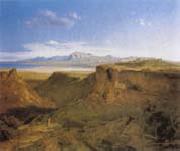
was a German landscape painter and the most famous member of the Rottmann family of painters. Rottmann belonged to the circle of artists around the Ludwig I of Bavaria, who commissioned large landscape paintings exclusively from him. He is best known for mythical and heroising landscapes. The landscape painter Karl Lindemann-Frommel belonged to his school. Carl Anton Joseph Rottmann was born in Handschuhsheim (today a part of Heidelberg) on January 11, 1797. There he received his first drawing lessons from his father, Friedrich Rottmann, who taught drawing at the university in Heidelberg. In his first artistic period he painted atmospheric phenomena. In 1821 he moved to Munich, where his second period began, and in 1824 he married Friedericke, the daughter of his uncle, Friedrich Ludwig von Sckell, who served as an attendant at court. This connection cleared the way for an acquaintance with King Ludwig, who in 1826-27 sponsored his travels in Italy in order to widen his repertoire, which up to that point consisted solely of domestic, German, landscapes. Upon his return he received from King Ludwig I a commission for a monumental cycle of Italian landscapes in the arcade of the Munich Hofgarten. The cycle, completed in 1833 in fresco, gave visual expression to Ludwiges alliance with Italy, and raised the genre of landscape painting to the height of history painting, the preferred mode of the Kinges other great commissions for monumental painting. |
|
 |
Carl Schuch
|
|
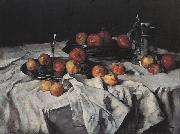
(30 September 1846 - 13 September 1903) was an Austrian painter, born in Vienna, who spent most of his lifetime outside Austria, in Germany, Italy and France. He painted primarily still lifes and landscapes.
During the period 1882-94 he was based in Paris, where he was greatly impressed by the work of Claude Monet whom he described as "the Rembrandt of plein-air painting" although he was attracted most of all to Rembrandt and the artists of the Barbizon school. In 1884 and 1885 he spent the summer months in the Netherlands, studying the Dutch old masters as well as the contemporary painters of the Hague School, and filling notebooks with detailed descriptions of the colors he observed in paintings that he admired. Of all the artists belonging to the circle around Wilhelm Leibl (called the Leibl-Kreis), Schuch was the most devoted to color. His work marks the transition from the realist tradition to the modern movement in Vienna, esthetically, however, it is far from contemporary trends, and from its means and ends, comparable to Paul Cezanne (Gottfried Boehm, referring to Arnold Gehlen). |
|
|
|
 |
Carl Spitzweg
|
|
German Painter, 1808-1885
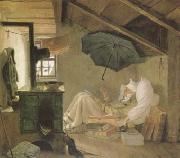
German painter. He trained (1825-8), at his father's insistence, as a pharmacist, by 1829 becoming manager of a pharmacy in the Straubing district of Munich. From 1830 to 1832 he made advanced studies in pharmacy, botany and chemistry at the University of Munich, passing his final examination with distinction. On receiving a large legacy in 1833, which made him financially independent, he decided to become a painter. He had drawn since the age of 15 and had frequented artistic circles since the late 1820s; but he had no professional training as a painter. He learnt much from contacts with young Munich landscape painters such as Eduard Schleich the elder and produced his first oil paintings in 1834. In 1835 he became a member of the Munich Kunstverein but left two years later due to disappointment over the reception of the first version of the Poor Poet (1837; Munich, Neue Pin.; second version 1839; Berlin, Neue N.G.), a scene of gently humorous pathos that has since become his most celebrated work. Spitzweg's decision to leave the Kunstverein, however, was also encouraged by his first successful attempts to sell his paintings independently. In 1839 he travelled to Dalmatia, where he made sketches that he used for many later works on Turkish themes (e.g. the Turkish Coffee House, c. 1860; Munich, Schack-Gal.). From the 1840s he travelled regularly, usually with his close friend, the painter Schleich, both within Bavaria and to Austria and Switzerland and also to the Adriatic coast, especially to Trieste. |
|
|
|
 |
Carl Tragardh
|
|
(20 September 1861 - 5 June 1899) was a Swedish painter.
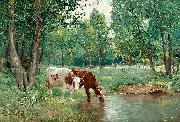
Trägårdh studied at the Royal Swedish Academy of Arts in Stockholm 1881-1883, in Karlsruhe 1883-84, and Munich until 1885. He then moved to France where he became a resident until his death. He exhibited both in Sweden and in France. He received a couple of medals and found a patron in the French singer and art collector Jean-Baptiste Faure (1830 - 1914) who bought some 40 paintings by him. His production is often landscape with grazing cattle, usually cows or sheep.
|
|
|
|
 |
Carl Wilhelm Barth
|
|
(1847 - 1919) was a Norwegian painter.
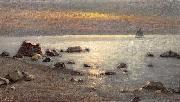
He was born in Christiania. He studied painting under Hans Gude from 1881 to 1883, and having worked as a naval officer until then, he specialized in marine art. He is represented with three works in the National Gallery of Norway.
He was the son of Jacob Bøckmann Barth and brother of Agnar Johannes Barth, both foresters.
|
|
 |
Carl Wilhelmson
|
|
1866-1928
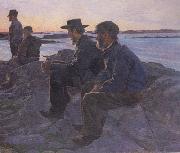
Swedish painter and lithographer. Wilhelmson trained first as a commercial lithographer in Göteborg. In 1886 he enrolled as a student of decorative painting at Valand College of Art where his teacher was Carl (Olof) Larsson. In 1888, having obtained a travel grant, he went to Leipzig to study lithographic technique. From 1890 to 1896 he lived in Paris, where he worked as a lithographer and commercial artist and studied at the Academie Julian. Wilhelmson's preferred subject-matter was the coastal landscape of Bohuslen and the people of its little fishing villages with their huddles of wooden houses. There is no trace of ethnography in his depictions of local life; they are full of serious realism and display a sensitive insight into the perilous life of the fishermen, with which he had been familiar since childhood. In the Village Shop |
|
 |
Carl Wimar
|
|
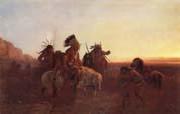
1828 - 1862,American painter and photographer of German birth. He arrived in St Louis in 1843. From 1846 to 1850 he studied painting under the St Louis artist Leon de Pomarede (1807-92). In 1852 he continued his studies at the Kunstakademie in Desseldorf, where he worked with Josef Fay (1813-75) and Emanuel Gottlieb Leutze until about 1856. In 1858, having once more based himself in St Louis, he travelled up the Mississippi in order to draw and photograph Indians. Wimar joined a party of the American Fur Trading Company and made several journeys between 1858 and 1860 up the Mississippi, Missouri and Yellowstone rivers in search of Indian subjects. His painting, the Buffalo Hunt (1860; St Louis, MO, Washington U., Gal. A.), became one of the original works in the collection of the Western Academy of Art. In 1861 Wimar was commissioned to decorate the rotunda of the St Louis Court-house with scenes of the settlement of the West. |
|
 |
Carle Vanloo
|
|
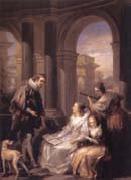
French Painter, 1705-1765,was a French subject painter, and a younger brother of Jean-Baptiste van Loo. He was the most famous member of a successful dynasty of painters of Dutch origin. His oeuvre includes every category: religion, history, mythology, portraiture, allegory, and genre scenes. was a French subject painter, and a younger brother of Jean-Baptiste van Loo. He was the most famous member of a successful dynasty of painters of Dutch origin. |
|
 |
carle vernet
|
|
Antoine Charles Horace Vernet aka. Carle Vernet (14 August 1758 - 17 November 1835) was a French painter, the youngest child of Claude Joseph Vernet, and the father of Horace Vernet.
The Battle of Wagram; colored litho by Carle Vernet and Jacques SwebachBorn in Bordeaux, Vernet was a pupil of his father and of Nicolas-Bernard Lepicie. Strangely, after winning the grand prix (1782), his father had to recall him back from Rome to France to prevent him from entering a monastery.
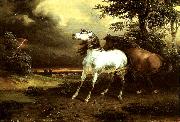
In his Triumph of Paulus Aemilius, he broke with tradition and drew the horse with the forms he had learnt from nature in stables and riding-schools. His hunting-pieces, races, landscapes, and work as a lithographer were also very popular.
Carle's sister was executed by the guillotine during the Revolution. After this, he gave up art.
When he again began to produce under the French Directory (1795 - 1799) , his style had changed radically. He started drawing in minute detail battles and campaigns to glorify Napoleon. His drawings of Napoleon's Italian campaign won acclaim as did the Battle of Marengo, and for his Morning of Austerlitz Napoleon awarded him the Legion of Honour. Louis XVIII of France awarded him the Order of Saint Michael. |
|
 |
Carles Arthur Beecher
|
|
American Modernist Painter, 1882-1952
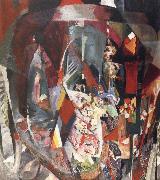
was an American Modernist painter. He was born in Philadelphia, Pennsylvania, and studied at the Pennsylvania Academy of the Fine Arts between 1900 and 1907. He studied with Thomas Pollock Anshutz, Hugh Breckenridge, Henry McCarter, Cecilia Beaux, and William Merritt Chase. In 1907 he traveled to France where he remained until 1910. In France, he greatly admired the works of Cezanne and Matisse, and became close friends with John Marin and Eduard Steichen. He displayed six landscapes in the Salon d'Automne of 1908. |
|
 |
Carleton E.Watkins
|
|
American photographers , b. 1829, d. 1916
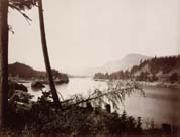
was a noted 19th century California photographer. Carleton Emmons Watkins was born in Oneonta, upstate New York. He went to San Francisco during the gold rush, arriving in 1851. He traveled to California with Oneontan Collis Huntington, who later became one of the owners of the Central Pacific Railroad, which helped Watkins later in his career. His interest in photography started as an aide in a San Francisco portrait studio, and started taking photographs of his own in 1861. He became interested in landscape photography and soon started making photographs of California mining scenes and of Yosemite Valley. He experimented with several new photographic techniques, and eventually favored his "Mammoth Camera," which used large glass plate negatives, and a stereographic camera. He became famous for his series of photographs and historic stereoviews of Yosemite Valley in the 1860s, and also created a variety images of California and Oregon in the 1870s and later. Watkins purchased the 1860s Central Pacific Railroad construction stereoview negatives from CPRR official photographer Alfred A. Hart and continued their publication through the 1870s. However Watkins was not a good businessman. He spent lavishly on his San Francisco studio and went deeply in debt. His photographs were auctioned, following a business setback, resulting in his photographs being published without credit by I. W. Taber, the new owner. Watkins also had problems of his photographs being reprinted without permission by Eastern companies and with other photographers rephotographing the exact scenes Watkins photographed. In 1879, Watkins married his 22-year-old assistant, Frances Sneade, with whom he had two children. Watkins began anew with his "New Series," which included a variety of subjects and formats, mostly related to California. |
|
|
|
 |
Carlo Dolci
|
|
1616-1686
Italian
Carlo Dolci Locations
Italian painter. The major Florentine painter of the 17th century, he enjoyed an international reputation in his own lifetime. He was a gifted portrait painter and painted a number of large altarpieces, but his reputation is largely based on his half-length, single-figure paintings, characterized by their intense religiosity and meticulous technique. His mature style was complex and sophisticated. Intended for cultivated and aristocratic circles, his was never a popular art in any sense. Baldinucci described the painter tormented fantasy and dark fantasms, and his disturbed personality is evident throughout his work after the later 1640s. |
|
 |
Carlo Antonio Procaccini
|
|
(born 1555) was an Italian painter of the late-Renaissance period.
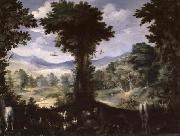
He was the third son of Ercole, the brother of Camillo and Giulio Cesare the elder, and father of Ercole Procaccini the Younger (1605?C1675). He was born at Bologna and initially trained by his father, though he excelled in painting landscapes and still-lifes with flowers and fruit, mainly in Milan.
|
|
 |
Carlo Bonavia
|
|
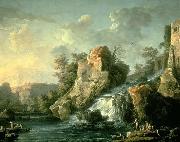
was an Italian painter known for idyllic landscape paintings, engravings and drawings. He was active from 1740 until his death in 1788. He is thought to be from Rome, but worked in Naples from about 1751 to 1788. He was trained in the Neapolitan landscape tradition of Salvator Rosa (1615-1673) and Leonardo Coccorante (1680-1750), but was much more strongly influenced by the work of Claude Joseph Vernet, who visited Naples in 1737 and 1746. |
|
 |
Carlo Bononi
|
|
Italian, 1569-1632,Italian painter. He was among the last great painters of the Ferrarese school, his style uniting warm Venetian colour with the lyrical effects of light and elegant draughtsmanship of Ludovico Carracci. He was a pupil of Giuseppe Mazzuoli (c. 1536-89), but his early activity is little documented. The Martyrdom of St Paul (Pommersfelden, Schloss Weissenstein), which is indebted to Mazzuoli and combines elements of Ferrarese and Venetian traditions, may represent the earliest phase of his development. Later, through a study of the art of Ludovico Carracci, modified by a response to Dosso Dossi and to Correggio, he developed a more individual style. An altarpiece of the Virgin with SS Maurilius and George (Vienna, Ksthist. Mus.) is unanimously dated before 1600. It is probable that Bononi made study tours to Bologna, Parma, Verona and Venice. Between 1605 and 1610 he spent two years in Rome (Baruffaldi), a visit confirmed by three paintings of scenes from the Life of St Paternian in the church of S Paterniano in Fano; dated between 1610 and 1612 (Emiliani), these reflect a direct study of Caravaggio and of his early Roman followers, such as Orazio Borgianni. |
|
|