|
|
 |
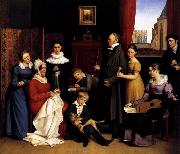
Bartolomeo Caporali
|
|
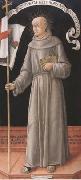
(c. 1420-c. 1505 ; active 1454-1499) was an Italian painter born and active in Perugia. He painted a Madonna and Saints (1487) for the church of Santa Maria Maddalena at Castiglione del Lago.
|
|
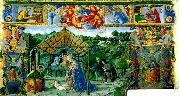 |
bartolomeo della gatta
|
|
(1448 -1502), born Pietro di Antonio Dei, was an Italian (Florentine) painter, illuminator, and architect. He was the son of a goldsmith. He was a colleague of Fra Bartolommeo. In 1468, Bartolomeo became a monk in the Order of Camaldoli, probably in the Church of Santa Maria degli Angeli in Florence, which his brother Nicolo had already entered. Upon taking holy orders, he changed his name to Bartolomeo. About 1481, he was summoned to Rome where he contributed to the cycle of frescos on the walls of the Sistine Chapel. Bartolomeo eventually became Abbot of San Clemente in Arezzo. He died in 1502 and was buried in the Abbey of San Clemente.
|
|
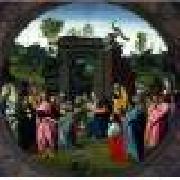 |
BARTOLOMEO DI GIOVANNI
|
|
Italian Early Renaissance Painter, active 1475-1511
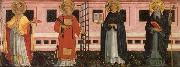
Bartolomeo di Giovanni, also known as Bartolommeo di Giovanni and as Alunno di Domenico, was an early renaissance Italian painter of the Florentine School who was active from about 1480 until his death in 1501. He studied with and assisted Domenico Ghirlandaio, painting the predella of Ghirlandaio's Adoration of the Magi in the Ospedale degli Innocenti (Foundling Hospital) in Florence, in 1488. Bartolomeo di Giovanni also worked under the guidance of Sandro Botticelli. |
|
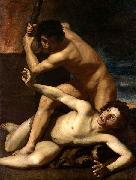 |
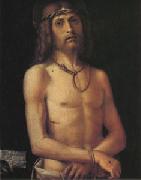
Bartolomeo Manfredi
|
|
(baptised 25 August 1582 - 12 December 1622) was an Italian painter, a leading member of the Caravaggisti (followers of Michelangelo Merisi da Caravaggio) of the early 17th century.
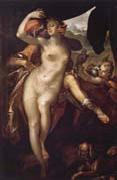
Manfredi was born in Ostiano, near Cremona. He may have been a pupil of Caravaggio in Romeat his famous libel trial in 1603 Caravaggio mentioned that a certain Bartolomeo, accused of distributing scurrilous poems attacking Caravaggio's detested rival Baglione, had been a servant of his. Certainly the Bartolomeo Manfredi known to art history was a close follower of Caravaggio's innovatory style, with its enhanced chiaroscuro and insistence on naturalism, with a gift for story-telling through expression and body-language.
Caravaggio in his brief careerehe rocketed to fame in 1600, was exiled from Rome in 1606, and was dead by 1610 had a profound effect on the younger generation of artists, particularly in Rome and Naples. And of these Caravaggisti (followers of Caravaggio), Manfredi seems in turn to have been the most influential in transmitting the master's legacy to the next generation, particularly with painters from France and the Netherlands who came to Italy. Unfortunately no documented, signed works by Manfredi survive, and several of the forty or so works now attributed to him were formerly believed to be by Caravaggio. The steady disentangling of Caravaggio from Manfredi has made clear that it was Manfredi, rather than his master, who was primarily responsible for popularising low-life genre painting among the second generation of Caravaggisti.
Manfredi was a successful artist, able to keep his own servant before he was thirty years old, "a man of distinguished appearance and fine behaviour" according to the biographer Giulio Mancini, although seldom sociable. He built his career around easel paintings for private clients, and never pursued the public commissions upon which wider reputations were built, but his works were widely collected in the 17th century and he was considered Caravaggio's equal or even superior. His Mars Chastising Cupid offers a tantalising hint at a lost Caravaggio: the master promised a painting on this theme to Mancini, but another of Caravaggio's patrons, Cardinal Francesco Maria Del Monte, had taken it, and Mancini therefore commissioned Manfredi to paint another for him, which Mancini considered Manfredi's best work.
Manfredi died in Rome in 1622. Gerard Seghers (or Segers; 1589-1651) was one of his pupils
|
|
 |
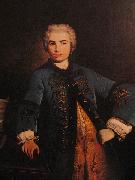
Bartolomeo Montagna
|
|
Orzinuovi ca 1450-Vicenza 1523
.Painter and draughtsman. Montagna is first documented in 1459 in Vicenza as a minor and, still a minor, in 1467. In 1469 he is recorded as a resident of Venice. In 1474 he was living in Vicenza where, in 1476 and 1478, he was commissioned to paint altarpieces (now lost). He has variously been considered a pupil of Andrea Mantegna (Vasari), Giovanni Bellini, Antonello da Messina, Alvise Vivarini, Domenico Morone and Vittore Carpaccio. While none of these artists, except Carpaccio, was irrelevant to Montagna's stylistic formation, scholars agree that Giovanni Bellini was the primary influence on his art. He may have worked in Bellini's shop around 1470. Several of Montagna's paintings of the Virgin and Child in which the influence of Antonello da Messina is especially marked (e.g. two in Belluno, Mus. Civ.; London, N.G., see Davies, no. 802) are likely to be close in date to Antonello's sojourn in Venice (1475-6); they are therefore best considered Montagna's earliest extant works (Gilbert, 1967) rather than as an unexplained parenthesis around 1485 between two Bellinesque phases (Puppi, 1962). These early paintings appear to be followed by others in which the geometrically rounded forms derived from Antonello become more slender and sharper-edged. Their figures are imbued with a deeply felt, individual humanity, sometimes austere and minatory, sometimes tender. Among them are some larger-scale works, |
|
 |
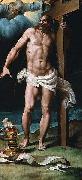
Bartolomeo Nazari
|
|
Bartolomeo Nazari (May 31, 1693 - August 24, 1758) was an Italian painter of the late-Baroque, mainly active in Venice as a portraitist.
Born in Clusone, near Bergamo. By 1716, he had become an apprentice under Angelo Trevisani, but visited in 1723 the Roman studio of Angelo's brother, the Venetian Francesco Trevisani, and then also studied with Benedetto Luti. Nazari likely knew personally Fra Galgario, the renowned portraitist from Bergamo, and is described by some as a pupil. He returns to Venice in 1724, and is registered with the Fraglia dei Pittori by 1726. In 1744, he traveled to Frankfurt to paint the emperor Charles VII and his family and other members of the court. In 1756, he was inducted into the newly founded Accademia of Venice. His son Nazario Nazari was also a painter. Among his patrons was Consul Joseph Smith and the former general Johann Matthias von der Schulenburg (who owned over eight diverse portrait paintings). He painted the portraits of a number of operatic singers including Farinelli. He died returning from Genoa, where he had painted the Doge. |
|
 |
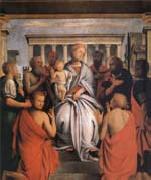
Bartolomeo Passerotti
|
|
(1529-1592) was an Italian painter of the mannerist period, who worked mainly in his native Bologna.
He traveled to Rome in the mid-16th century, where he worked under Girolamo Vignola and Taddeo Zuccari. Upon returning to Bologna, he accumulated a large studio, and influenced many Bolognese who would later play a role in the rise of the Baroque. Annibale Carracci (whose brother Agostino studied with Passarotti) was influenced by Passarotti's genre scenes in a select set of paintings (such as The Beaneater and The Butcher's Shop, the latter being originally attributed to Passarotti). Lucio Massari and Francesco Brizzi were among his pupils. Four of Passarotti's sons, including Ventura, Aurelio, Tiburzio, and Passarotto were painters.
|
|
|
|
 |
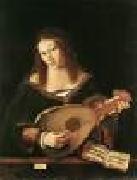
Bartolomeo Suardi
|
|
c. 1465?C1530,was an Italian painter and architect, mainly active in his native Milan. He was born in Milan, the son of Alberto Suardi, but his biography remains unclear, and was long complicated by two "Pseudo-Bramantinos". He was trained by Donato Bramante, adopting a diminutive form of his master's name. This training gave him influences from by the Urbino quattrocento tradition of immobile realism, and later he assimilated some elements of the style of Leonardo, after he arrived in Milan, although in other respects he remained faithful to his training in the style of Central Italy. He is documented in late 1508 as helping in the decoration of the Vatican Stanze though nothing remains of his work there, and by 1509 he was back in Milan. His style changed considerably during his career, and also shows strongly individual traits. His main influences were the serene and sometimes unnatural quietist classicism of Piero della Francesca, Leonardo da Vinci, and Ercole de' Roberti |
|
 |
BARTOLOMEO VENETO
|
|
Italian Painter, ca.1470-1531
Italian painter. He worked in Venice, the Veneto and Lombardy in the early decades of the 16th century. Knowledge of him is based largely on the signatures, dates and inscriptions on his works. His early paintings are small devotional pictures; later he became a fashionable portraitist. His earliest dated painting, a Virgin and Child (1502; Venice, priv. col., see Berenson, i, pl. 537), is signed 'Bartolomeo half-Venetian and half-Cremonese'. The inscription probably refers to his parentage, but it also suggests the eclectic nature of his development. This painting is clearly dependent on similar works by Giovanni Bellini and his workshop, but in a slightly later Virgin and Child (1505; Bergamo, Gal. Accad. Cararra) the sharp modelling of the Virgin's headdress and the insistent linear accents in the landscape indicate Bartolomeo's early divergence from Giovanni's depiction of light and space. An inscription on his Virgin and Child of 1510 (Milan, Ercolani Col.) states that he was a pupil of Gentile Bellini, an assertion supported by the tightness and flatness of his early style. The influence of Giovanni is still apparent in the composition of the Circumcision (1506; Paris, Louvre), although the persistent stress on surface patterns and the linear treatment of drapery and outline is closer to Gentile. Bartolomeo's experience as a painter at the Este court in Ferrara (1505-8) probably encouraged the decorative emphasis of his style. In the half-length Portrait of a Man (c. 1510; Cambridge, Fitzwilliam) the flattened form of the fashionably dressed sitter is picked out against a deep red curtain so that the impression of material richness extends across the entire picture surface. |
|
|
|
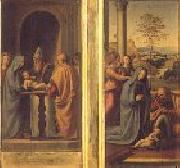 |
BARTOLOMEO, Fra
|
|
b. 1473, Firenze, d. 1517
b. 1473, Firenze, d. 1517
He was born in Savignano di Prato, Tuscany. He received the nickname of Baccio della Porta for his house was near the Porta ("Gate") San Pier Gattolini.
Starting from 1483 or 1484, by recommendation of Benedetto da Maiano, he apprenticed in the workshop of Cosimo Rosselli. In 1490 or 1491 he began a collaboration with Mariotto Albertinelli. In the late 1490s Baccio was drawn to the teachings of Fra Girolamo Savonarola, who denounced what he viewed as vain and corrupt contemporary art. Savonarola argued for art serving as a direct visual illustration of the Bible to educate those unable to read the book. From 1498 is his famous portrait of Savonarola, now in the Museo Nazionale di San Marco in Florence. The following year he was commissioned a fresco of the Universal Judgement for the Ospedale di Santa Maria Nuova, completed by Albertinelli and Giuliano Bugiardini when Baccio became a Dominican friar on July 26, 1500. The following year he entered the convent of San Marco.
He renounced painting for several years, not resuming until 1504 when he became the head of the monastery workshop in obedience to his superior. In that year he began a Vision of St. Bernard for Bernardo Bianco's family chapel in the Badia Fiorentina, finished in 1507. Soon thereafter, Raphael visited Florence and befriended the friar. Bartolomeo learned perspective from the younger artist, while Raphael added skills in coloring and handling of drapery, which was noticeable in the works he produced after their meeting. With Raphael, he remained on the friendliest terms, and when he departed from Rome, left in his hands two unfinished pictures which Raphael completed.
At the beginning of 1508 Bartolomeo moved to Venice to paint a Holy Father, St. Mary Magdalene and St. Catherine of Siena for the Dominicans of San Pietro Martire in Murano, influenced somewhat by Venetian colorism. As the Dominicans did not pay the work, he took it back to Lucca, where it can be seen now. Also in Lucca, in the October 1509, he painted by Albertinelli an altarpiece with Madonna and Child with Saints for the local cathedral. On November 26, 1510 Pier Soderini commissioned him an altarpiece for the Sala del Consiglio of Florence, now in the Museum of San Marco. Two years later he finished another altarpiece for the cathedral of Besancon. |
|
|
|
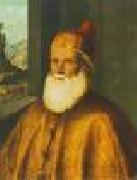 |
BASAITI, Marco
|
|
Italian Painter, ca.1470-1530
Marco Basaiti (c. 1470 ?C 1530) was a Venetian painter and a rival of Giovanni Bellini. His best known works are Christ Praying in the Garden (1516) and the Calling of St. Peter and St. Andrew.
Christ praying in the GardenThought to have originated in the Balkans, his date of birth and arrival in Venice are not known, but he began to paint actively around 1496. He is generally believed to have learned to paint in the workshops of Alvise Vivarini. Basaiti worked primarily with religious themes, but he also did portraits. Contrary to the trends of the time, he used very bright colours in rendering his religious subjects. |
|
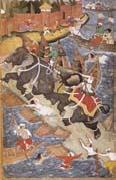 |
Basawan
|
|
Indian Miniaturist, active ca.1556-1600,Indian miniature painter. One of the great talents to flourish under the emperor Akbar (reg 1556-1605), he was a prolific painter who contributed to virtually all the great illustrated manuscripts executed in the imperial workshops over a span of some 40 years. While most Mughal artists were concerned with the importance of line, colour and surface pattern, Basawan, with a greater understanding of the techniques of imported European works, developed a palette closer to that of European oil painting and dissolved outlines to create greater three-dimensionality. In his work, surface patterns are subservient to a dramatic spatial penetration of the picture plane. These traits were quite new within both Indian and Islamic traditions, and Basawan led the vanguard in adopting them. His work is remarkable also for the complexity of his compositions, his skill at giving roundness and density to his figures and his sensitive portrait-like faces. |
|
 |
BASCHENIS, Evaristo
|
|
Italian Baroque Era Painter, 1617-1677
Evaristo Baschenis (December 7, 1617 ?C March 16, 1677) was an Italian Baroque painter of the 17th century, active mainly around his native city of Bergamo. He was born to a family of artists. He is best known for still lifes, most commonly of musical instruments. This could explain his friendship with a family with notable violin makers from Cremona. Still-life depictiona were uncommon as a thematic among Italian painters prior to the 17th century. Baschenis, along with the more eccentric 16th century painter Milanese Arcimboldo, represents provincial outputs with idiosyncratic tendencies that appear to appeal to the discernment of forms and shapes rather than grand manner themes of religious or mythologic events. For Arcimboldo, the artifice is everything; for Baschenis, the items, man-made musical instruments, have a purpose and a beauty even in their silent geometry. One source for his photographic style of still life could be Caravaggio's early painting of peaches, or alternatively, Dutch paintings. The most faithful imitator of his style is a younger contemporary Bergamese, Bartolomeo Bettera. Baschenis is a contemporary of the Bergamese portrait artist, Carlo Ceresa, and appears to have been influential for the Modenese artist Cristoforo Munari. |
|
 |
Basilius Besler
|
|
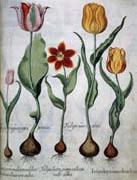
1561-1629,was a respected Nuremberg apothecary and botanist, best known for his monumental Hortus Eystettensis. He was curator of the garden of Johann Konrad von Gemmingen, prince bishop of Eichstätt in Bavaria. The bishop was an enthusiastic botanist who derived great pleasure from his garden, which was the only important European botanical garden outside Italy. The gardens surrounded the bishop's palace, Willibaldsburg, which was built on a hill overlooking the town. These gardens had been started in 1596 and designed by Besler's colleague, Joachim Camerarius, the Younger (1534-1598), a physician and botanist. Upon Camerarius' death in 1598, Besler had the remainder of Camerarius' plants moved to Eichstätt and carried on the work of planting and supervision. The bishop commissioned Besler to compile a codex of the plants growing in his garden, a task which Besler took sixteen years to complete, the bishop dying shortly before the work was published. Besler had the assistance of his brother and a group of skilled German draughtsmen and engravers, including Sebastian Schedel, an accomplished painter, and Wolfgang Kilian, a skilled engraver from Augsburg. Kilian and his team engraved the initial copper plates, but after the bishop??s death, the operations moved to N??rnberg and a new team of engravers, among whom were Johannes Leypold, Georg Gärtner, Levin and Friedrich van Hulsen, Peter Isselburg, Heinrich Ulrich, Dominicus Custos and Servatius Raeven. Camerarius' nephew, Ludwig Jungermann (1572-1653), was a botanist and wrote the lion's share of the descriptive text. The work was named Hortus Eystettensis (Garden at Eichstätt). The emphasis in botanicals of previous centuries had been on medicinal and culinary herbs, and these had usually been depicted in a crude manner. The images were often inadequate for identification, and had little claim to being aesthetic. The Hortus Eystettensis changed botanical art overnight. The plates were of garden flowers, herbs and vegetables, exotic plants such as castor-oil and arum lilies. |
|
|
|
 |
BASSA, Ferrer
|
|
Spanish painter
active 1324-1348
His workshop was in Calle Cucurulla, Barcelona, and commissions from a variety of patrons, mostly royal, are documented. In 1324 he was paid for painting two chapels and two crosses for the church at Sitges. Between c. 1333 and c. 1335 he illuminated a book on the Usages of Barcelona and Customs of Catalonia for Alfonso IV of Aragon, and in 1335 he was paid for an altarpiece. Further payments, in 1339 and 1340, were for two altarpieces for the chapel of the Aljaferea Palace (a Moorish palace) in Saragossa. About 1340 he received a commission for an altarpiece of St Hilary for the diocese of Lleida (Sp. Lerida). In 1341 Bassa had begun work on three altarpieces for the Episcopal See at Lleida, commissioned by Ot de Montacada (c. 1290-1341). In 1342 Peter IV (the Ceremonious) of Aragon asked his wife, Maria of Navarre, to send him a Book of Hours illuminated by Ferrer Bassa, and in the same year the artist was also paid for a commission by Queen Constanza of Mallorca. In 1343 and 1344 he was paid for an altarpiece and other works for the chapel of the Aljaferea Palace in Saragossa and for an altarpiece for the chapel of the royal palace at Barcelona. In 1344 Bassa was commissioned to decorate the S Miguel Chapel, then the cell of the abbess in the Pedralbes Monastery, Barcelona, although he only started work in 1346. He was involved in further royal commissions in 1345, including an altarpiece for the chapel of the castle at Perpignan. |
|
 |
BASSANO, Jacopo
|
|
Italian High Renaissance Painter, ca.1510-1592
Jacopo Bassano (also known as Jacopo da Ponte, c. 1515 - 13 February 1592) was an Italian painter who was born and died in Bassano del Grappa near Venice, from which he adopted the name.
His father Francesco Bassano the Elder was a "peasant artist" and Jacopo adopted some of his style as he created religious paintings with novel features including animals, farmhouses, and landscapes. He trained initially with his father, Francesco da Ponte the Elder, then in the studio of Bonifacio Veneziano. His mature style, however, followed the example of Titian. Having worked in Venice and other Italian towns, he established a workshop in Bassano with his four sons: Francesco the Younger (1549?C1592), Girolamo (1566?C1621), Giovanni Battista (1553?C1613), and Leandro (1557?C1622). They shared his style, and some works are difficult to attribute precisely. |
|
 |
BASSANO, Leandro
|
|
Italian Mannerist Painter, 1557-1622
Son of Jacopo Bassano. He entered the workshop of his father when very young and soon developed a style of painting strongly based on drawing. Leandro used fine brushwork, with cool, light colours, smoothly applied in well-defined areas, unlike his father, who painted with dense and robust brushstrokes. From 1575 Leandro's participation in the workshop increased, and he became his father's principal assistant after Francesco Bassano il giovane moved to Venice in 1578. |
|
 |
BASSEN, Bartholomeus van
|
|
Dutch Baroque Era Painter, 1590-1652
Dutch painter and architect. He was the grandson of Bartolt Ernst van Bassen from Arnhem, who was Clerk of the Court of Holland in The Hague. In 1613 van Bassen was admitted to the Guild of St Luke in Delft, having come from outside the city. In 1622 he became a member of the Guild in The Hague where he was also municipal architect from 1638 until his death. He married in 1624; his son Aernoudt married a daughter of Cornelis van Poelenburch. |
|
 |
BASSETTI, Marcantonio
|
|
Italian painter, Veronese school (b. 1588, Verona, d. 1630, Verona)
Italian painter. He was a pupil of Felice Brusasorci (Ridolfi), but he soon moved to Venice, where he studied the art of Jacopo Tintoretto in particular, but also that of Jacopo Bassano and of Veronese, whose works he copied in chiaroscuro drawings (mainly Windsor Castle, Royal Lib.) similar to those of Domenico Tintoretto. Bassetti's early painted Portrait of a Man with a Glove (Verona, Castelvecchio) is essentially Venetian, close to the art of Bassano. |
|
 |
BASTIANI, Lazzaro
|
|
Italian painter, Venetian school (b. 1449, Venezia, d. 1512, Venezia)
Italian painter. He is first recorded in 1449, as a painter in Venice and in 1460 he was paid for an altarpiece in S Samuele there. Although no extant work is securely documented, several are signed and two are dated. The influence of Andrea del Castagno is clear in his early works, of the 1460s: the signed mosaic of St Sergius (Venice, S Marco), the Archangel Gabriel (Padua, Mus. Civ.) and the signed Piet? (Venice, S Antonino). Also assigned to this period are the Adoration of the Magi (New York, Frick), the polyptych of St Francis (Matera, S Francesco), the St Jerome. |
|
 |
Bastiano da Sangallo
|
|
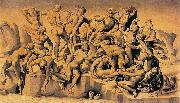
(1481 - May 31, 1551) was an Italian sculptor and painter of the Renaissance period, active mainly in Tuscany. He was a nephew of Giuliano da Sangallo and Antonio da Sangallo the Elder. He is usually known as Aristotile, a nickname he received from his air of sententious gravity. He was at first a pupil of Perugino, but afterwards became a follower of Michelangelo. Mentioned by Vasari as one who made a small copy of the Cartoon of Michelangelo Battle of Cascina (1506).
|
|
 |
BATONI, Pompeo
|
|
Italian Rococo Era Painter, 1708-1787
He was born in Lucca, the son of a goldsmith, Paolino Batoni. He moved to Rome in 1727, and apprenticed with Agostino Masucci, Sebastiano Conca and/or Francesco Imperiale (1679-1740).
By the early 1740s, however, he started to receive independent commissions. In 1741, he was inducted into the Accademia di San Luca. His celebrated painting, The Ecstasy of Saint Catherine of Siena (1743) illustrates his academic refinement of the late-Baroque style. Another masterpiece, his Fall of Simon Magus was painted initially for the St Peter's Basilica.
Batoni became a highly-fashionable painter in Rome, particularly after his rival, the proto-neoclassicist Anton Raphael Mengs, departed for Spain in 1761. Batoni befriended Winckelmann and, like him, aimed in his painting to the restrained classicism of painters from earlier centuries, such as Raphael and Poussin, rather than to the work of the Venetian artists then in vogue.
He was greatly in demand for portraits, particularly by the British traveling through Rome , who took pleasure in commissioning standing portraits set in the milieu of antiquities, ruins, and works of art. There are records of over 200 portraits by Batoni of visiting British patrons . Such "Grand Tour" portraits by Batoni came to proliferate in the British private collections, thus ensuring the genre's popularity in the United Kingdom, where Sir Joshua Reynolds would become its leading practitioner. In 1760, the painter Benjamin West, while visiting Rome would complain that Italian artists "talked of nothing, looked at nothing but the works of Pompeo Batoni".
In 1769, the double portrait of Joseph II and Leopold II won an Austrian nobility for Batoni. He also portrayed Pope Pius VI. According to a rumor, he bequeathed his palette and brushes to Jacques-Louis David. |
|
 |
BAUGIN, Lubin
|
|
French painter. He became a master in the painters' guild of Saint-Germain-des-Pr?s in 1629. From c. 1636 he was in Italy, but he is known to have been in Paris again in 1641; in 1645 he became a member of the Acad?mie de St Luc, and in 1651 he was also a member of the Acad?mie Royale after the temporary amalgamation of the two institutions. Like many of his generation he was deeply influenced by the art of the Fontainebleau school. The Mannerist tendency of his style
|
|
|
|
|
|
 |
Bazille, Frdric
|
|
Studied under Charles Gleyre.
French Impressionist Painter, 1841-1870
|
|
|
|
|
|
|
|
 |
Beaux, Cecilia
|
|
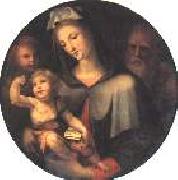
Studied under Bouguereau and Tony Robert-Fleury. Specializes in Portraits. American Painter, 1855-1942. American painter. She began her career painting on porcelain and producing lithographs and portrait drawings. She studied with Catharine Ann Drinker (1871), Francis Adolf van der Wielen (1872-3) and Camille Piton (1879), at the Pennsylvania Academy of the Fine Arts in Philadelphia (1877-8), and privately with William Sartain (1881-3). Under Sartain's guidance, she learnt to paint, producing her first major portrait, the Last Days of Infancy |
|
 |
BECCAFUMI, Domenico
|
|
Italian Mannerist Painter, ca.1486-1551
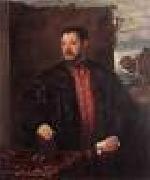
Domenico was born in Montaperti, near Siena, the son of Giacomo di Pace, a peasant who worked on the estate of Lorenzo Beccafumi. Seeing his talent for drawing, Lorenzo adopted him, and commended him to learn painting from Mechero, a lesser Sienese artist.[1] In 1509 he traveled to Rome, but soon returned to Siena, and while the Roman forays of two Sienese artists of roughly his generation (Il Sodoma and Peruzzi) had imbued them with elements of the Umbrian-Florentine Classical style, Beccafumi's style remains, in striking ways, provincial. In Siena, he painted religious pieces for churches and of mythological decorations for private patrons, only mildly influenced by the gestured Mannerist trends dominating the neighboring Florentine school. There are medieval eccentricities, sometimes phantasmagoric, superfluous emotional detail and a misty non-linear, often jagged quality to his drawings, with primal tonality to his coloration that separates him from the classic Roman masters. |
|
 |
BECCARUZZI, Francesco
|
|
Italian painter, Treviso school (b. ca. 1492, Conegliano, d. before 1563, Treviso)
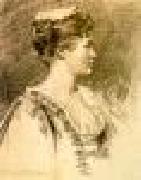
Francesco Beccaruzzi (c. 1492 - 1562) was an Italian painter of the Renaissance era, active near his hometown of Conegliano and in the neighborhood of Treviso. He was influenced by both Il Pordenone and later Titian. He painted Saint Francis receiving stigmata (1545) from Conegliano, but now in the Accademia in Venice. |
|
 |
Beckwith James Carroll
|
|
American, 1852-1917
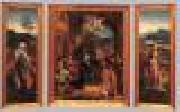
was an American portrait painter. He was born at Hannibal, Missouri, on 23 September 1852. He studied in the National Academy of Design, New York City, of which he afterwards became a member, and in Paris (1873-1878) under Carolus Duran. Returning to the United States in 1878, he gradually became a prominent figure in American art. He took an active part in the formation of The Fine Arts Society, and was president of the National Free Art League, which attempted to secure the repeal of the American duty on works of art. Among his portraits are those of William Merritt Chase (1882), Miss Jordan (1883), Mark Twain, Thomas Allibone Janvier, John Schofield and William Walton. He taught at the Art Students League of New York -- where Violet Oakley was one of his students |
|
 |
BEER, Jan de
|
|
Netherlandish Painter, ca.1475-1528
South Netherlandish painter and draughtsman. He is first mentioned in 1490 in the register of the Antwerp Guild of St Luke, apprenticed to the painter Gillis van Everen ( fl 1477-1513). In 1504 de Beer became a master. He subsequently served as alderman of the guild in 1509 and dean in 1515, although he found himself temperamentally unsuited to the position of dean, as is known from a lawsuit he filed in 1519 regarding guild administration. This document also reveals that de Beer participated in the preparations for Charles V's 'Joyous Entry' into Antwerp in 1515 and for the Antwerp Society of Rhetoricians' entry that year in the Malines landjuweel (regional competition of the rhetoricians). In 1510 and 1513 de Beer enrolled apprentices; his son Aert de Beer (c. 1509-before 6 Aug 1540) became an Antwerp master in 1529. The artist is undocumented between 1519 and 1528, by which date he was dead. In 1567 Guicciardini included de Beer in his list of famous Netherlandish painters. |
|
 |
BEERT, Osias
|
|
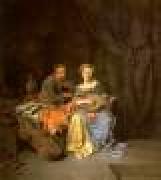
Flemish Baroque Era Painter, ca.1580-1624
Flemish painter. In 1596 he went to study with Andries van Baseroo and in 1602 became a master in the Antwerp Guild of St Luke; these two dates suggest his probable date of birth. Beert married Marguerite Ykens on 8 January 1606. Contemporary documents describe him as a cork merchant. The esteem enjoyed by Beert is indicated by the large number of pupils he had, including, in 1610, Frans van der Borch; in 1615, Frans Ykens; in 1616, Paulus Pontius; and, in 1618, Jan Willemssen. Beert's son, Osias Beert the younger (1622-78), was also a painter and became a master in 1645. |
|
 |
BEGA, Cornelis
|
|
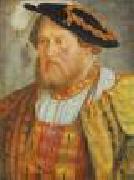
Dutch Baroque Era Painter, ca.1620-1664
Dutch painter, draughtsman and etcher. He was born into prosperous circumstances; his mother, Maria Cornelis, inherited half the estate (gold, silver, paintings, drawings and prints) and all of the red chalk drawings of her father, Cornelis Cornelisz. van Haarlem, a renowned Mannerist artist. Bega's father was Pieter Jansz. Begijn (d 1648), a gold- and silversmith. Like other family members, Bega was probably Catholic. Houbraken's claim that Bega studied with Adriaen van Ostade is likely to be correct; this was probably before 24 April 1653, when Bega joined Vincent Laurentsz. van der Vinne in Frankfurt for a journey through Germany, Switzerland and France. Bega had returned to Haarlem by 1 September 1654, at which time he joined the Guild of St Luke. |
|
|
|
 |
BEHAM, Barthel
|
|
German Northern Renaissance Engraver, 1502-1540
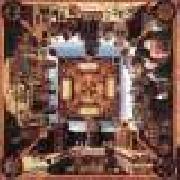
Barthel Beham or Bartel (1502 ?C 1540) was a German engraver, miniaturist and painter.
The younger brother of Hans Sebald Beham, he was born into a family of artists in Nuremberg. Learning his art from his elder brother, and Albrecht Durer, he was particularly active as an engraver during the 1520s, creating tiny works of magnificent detail, positioning him in the German printmaking school known as the "Little Masters". He was also fascinated with antiquity and may have worked with Marcantonio Raimondi in Bologna and Rome at some time in his career.
In 1525, along with his brother and Georg Pencz, the so-called "godless painters", he was banished from Lutheran Nuremberg for asserting his disbelief in baptism, Christ, or transubstantiation. Although later pardoned, he moved to Catholic Munich to work for the Bavarian dukes William IV and Ludwig X. Whilst there, his exceptional talent established him as one of Germany's principal portrait painters, favoured by distinguished patrons such as Emperor Charles V.
According to Joachim von Sandrart, he died in Italy during a trip under the patronage of Duke William. |
|
 |
BEHAM, Hans Sebald
|
|
German Northern Renaissance Engraver, 1500-1550
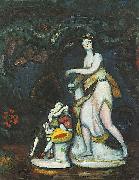
Hans Sebald Beham (1500 ?C 1550) was a German printmaker who did his best work as an engraver, and was also a designer of woodcuts and a painter and miniaturist. He is one of the most important of the "Little Masters", the group of German artists making old master prints in the generation after Durer.
Beham is best known as a prolific printmaker, producing approximately 252 engravings, 18 etchings and 1500 woodcuts, including woodcut book illustrations. He worked extensively on tiny, highly detailed, engravings, many as small as postage stamps, placing him in the German printmaking school known as the "Little Masters" from the size of their prints. These works he produced and published himself, whilst his much larger woodcuts were mostly commissioned work. The engravings found a ready market among German bourgeois collectors, but were not much seen in Italy. He also made prints for use as playing cards, wallpaper, coats of arms, and designs for other artists, including many designs for stained or painted glass. He also illuminated two prayer books and painted a table top (now in the Louvre ) for Cardinal Albrecht, Archbishop of Mainz. |
|
 |
Bela Ivanyi-Grunwald
|
|
(6 May 1867 - 24 September 1940) was a Hungarian painter, a leading member of the Nagybenya artists' colony and founder of the Kecskemet artists' colony.
Born in Som, Ivenyi-Grenwald began his artistic studies under Bertalan Szekely and Keroly Lotz at the Academy of Fine Arts in Budapest (1882-86) and continued them at Munich in 1886-87 and at the Academie Julian in Paris from 1887 to 1890. From 1891 he again worked in Munich; in 1894 he travelled with Ferenc Eisenhut to Egypt, where he painted several oriental-themed works. Beginning in 1889 he had regular exhibitions at the Palace of Art in Budapest. Characteristic of his early pictures is A Hader kardja ("The Warrior's Sword", 1890), a proto-Symbolist treatment of rural genre showing the influence of Jules Bastien-Lepage. After his return to Munich, Ivenyi-Grenwald painted a large-scale genre painting entitled Nihilistek sorsot heznak ("Nihilists Drawing Lots", 1893), a work as notable for its dramatic use of chiaroscuro as for its deeply felt subject-matter. In response to a state commission for the 1896 Millennium Exhibition in Budapest he produced an enormous academic history painting. |
|
 |
BELLANGE, Jacques
|
|
French Painter, ca.1575-1616
Jacques Bellange (c. 1575, place unknown - 1616) was an artist and printmaker from Lorraine, now in France, whose etchings and some drawings are his only securely identified works today. They are among the most striking Mannerist old master prints.
His known artistic activity dates only from 1602 to 1616 and he is now familiar chiefly for his etchings and drawings, all his decorative works and most of his paintings having perished. His highly idiosyncratic style was inspired by such Italian artists as Parmigianino, by the School of Fontainebleau and by northern artists including Albrecht D?rer and Bartholomeus Spranger. His work would seem to express a private and nervous religious sensibility through a style of the greatest refinement. |
|
 |
BELLE-CHOSE, Henri
|
|
Flemish Gothic Era Painter, active ca.1415-1440
South Netherlandish painter. He was one of the artists who came from the South Netherlands to work for the French royal family. On 23 May 1415 he succeeded Jean Malouel as court painter and Valet de Chambre to John the Fearless, Duke of Burgundy, in Dijon, and he may already have been connected with Malouel's workshop. On 5 November 1415 Bellechose was paid for painting four small wooden pillars with angels, which were placed around the high altar of Notre-Dame, Dijon. On 19 May 1416 the duke authorized the purchase of materials for Bellechose to complete two panels, one of the Martyrdom of St Denis and another showing the Death of the Virgin, for the Charterhouse of Champmol. Bellechose also carried out decorative work, including painting banners for the Duke's castle of Talant near Dijon in 1416 and coats of arms for the funeral of John the Fearless in 1419. On 5 April 1420 Bellechose was appointed court painter to Philip the Good, successor to John the Fearless. His first known commissions were again of a decorative nature, including work for the funerals of Margaret of Bavaria, wife of John the Fearless, in 1423 and of Catherine of Burgundy, daughter of an earlier Duke of Burgundy, Philip the Bold, in 1425 and for the marriage of Philip the Good's sister Agnes of Burgundy in 1424. During these years he had eight assistants and two apprentices; travelling artists, including some from German territory, also worked in his shop on a temporary basis. Around this time he married Alixant Lebon, daughter of a Dijon notary. On 21 November 1425 Philip the Good ordered an altarpiece of the Virgin venerated by John the Fearless and Philip the Good, accompanied by SS John the Evangelist and Claude, for the chapel of the castle at Saulx-le-Duc in Burgundy. Bellechose painted three statues for the new entrance gate to the palace in Dijon in 1426. In August 1429 he received an important commission for St Michel, Dijon, to make an altarpiece with Christ and the Twelve Apostles and an antependium showing the Annunciation. Exactly a year later his name appears for the last time in the ducal accounts. |
|
 |
BELLEGAMBE, Jean
|
|
Flemish painter (c. 1480 - c. 1535)
South Netherlandish painter and designer. His father, George Bellegambe, a cabinetmaker and musician, was a prominent citizen of Douai. Jean is first mentioned in a document of 1504, when he is referred to as a master painter, a burgher and married. His teacher is unknown, but his work bears some imprint of the art of Jan Provoost, who inherited Simon Marmion's studio. However, Bellegambe might equally have been apprenticed in Bruges or Brussels (possibly in the atelier of the Master of the Legend of St Mary Magdalen, for example), or even in Antwerp. The calm and serenity of Bellegambe's compositions, his treatment of landscape, his lightness of technique, his pursuit of clear, soft colours and delicate harmonies all indicate links with the work of Gerard David and Quinten Metsys. In the 17th century Bellegambe was known as 'the Master of Colours'. |
|
 |
BELLINI, Gentile
|
|
Italian Early Renaissance Painter, ca.1429-1507
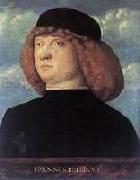
Gentile was born into a family of renowned painters: his father Jacopo Bellini, was a Venetian pioneer in the use of oil paint as an artistic medium; his acclaimed brother was Giovanni Bellini, and his brother-in-law Andrea Mantegna. Gentile was taught painting in the workshop of his father. Although today Gentile is often seen in the shadow of his more famous family members, in his own time he was considered among the greatest living painters in Venice and had no shortage of commissions; his talent as a portraitist revealed itself at an early age. |
|
 |
BELLINI, Giovanni
|
|
Italian High Renaissance Painter, ca.1430-1516
Giovanni Bellini (c. 1430 ?C 1516) was an Italian Renaissance painter, probably the best known of the Bellini family of Venetian painters. His father was Jacopo Bellini, his brother was Gentile Bellini, and his brother-in-law was Andrea Mantegna. He is considered to have revolutionized Venetian painting, moving it towards a more sensuous and colouristic style. Through the use of clear, slow-drying oil paints, Giovanni created deep, rich tints and detailed shadings. His sumptuous coloring and fluent, atmospheric landscapes had a great effect on the Venetian painting school, especially on his pupils Giorgione and Titian. |
|
 |
BELLINI, Jacopo
|
|
Italian Gothic Era Painter, ca.1400-1470
Born in Venice, Jacopo had been a pupil of Gentile da Fabriano. In 1411-1412 he was in Foligno, where with Gentile he worked at the Palazzo Trinci frescoes. In 1423 Bellini was in Florence, where he knew the new works by Brunelleschi, Donatello and Masaccio.
In 1424 he opened a workshop in Venice, which he ran right up until his death.
Many of his greatest works, including the enormous Crucifixion in the cathedral of Verona (1436), have disappeared. From c. 1430 is the panel with Madonna and Child, in the Accademia Carrara, once attributed to Gentile da Fabriano. In 1441, at Ferrara, where he was at the service of Leonello d'Este together with Leon Battista Alberti, he executed a portrait of that Marquess, now lost. Of this period the Madonna dell'Umilt??, probably commissioned by one of the brothers of Leonello.
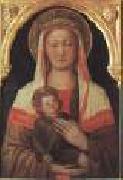
The influence from Masolino da Panicale towards more modern, early Renaissance themes is visible in the Madonna with Child (dated 1448) in the Pinacoteca di Brera: for the first time, perspective is present and the figure are more monumental. Later he contributed with works now lost to the Venetian churches of San Giovanni Evangelista (1452) and St. Mark (1466). From 1459 is a Madonna with Blessing Child in the Gallerie dell'Accademia.
Later he sojourned in Padua, where he trained a young Andrea Mantegna in perspective and classicist themes and where, in 1460, he finished a portrait of Erasmo Gattamelata, now lost. Of his late phase, a ruined Crucifix in the Museum of Verona and an Annunciation in Sant'Alessandro of Brescia remain. |
|
|