China Wholesale Oil Painting Reproductions No Minimum!


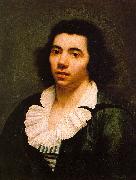
All Girodet-Trioson, Anne-Louis Oil Paintings

French Neoclassical Painter, 1767-1824


Girodet-Trioson, Anne-Louis Self-Portrait oil painting reproduction


Self-Portrait
Painting ID::  19051
  oil on canvas, The Hermitage, St. Petersburg


All Barry, James Oil Paintings

Dutch Baroque Era Painter, 1627-ca.1683 Studied under Otto Marseus van Schrieck. Students included Rachel Ruysch.


Barry, James Self-Portrait oil painting reproduction


Self-Portrait
Painting ID::  10717
  1803, oil on canvas, National Gallery of Ireland at Dublin


All WEST, Benjamin Oil Paintings

American Neoclassical Painter, 1738-1820


WEST, Benjamin Self-Portrait oil painting reproduction


Self-Portrait
Painting ID::  7222
  1770 Oil on canvas Baltimore Museum of Art, Baltimore


All DOU, Gerrit Oil Paintings

Dutch Baroque Era Painter, 1613-1675


DOU, Gerrit Self-Portrait oil painting reproduction


Self-Portrait
Painting ID::  18995
  1635-38 Oil on panel Cheltenham Art Gallery and Museums.


All Dyck, Anthony van Oil Paintings

Flemish Baroque Era Painter, 1599-1641


Dyck, Anthony van Self-Portrait oil painting reproduction


Self-Portrait
Painting ID::  19018
  Approx. 1622 oil on canvas The Hermitage, St. Petersburg


All Hoogstraten, Samuel Dircksz van Oil Paintings

Dutch Baroque Era Painter, 1627-1678


Hoogstraten, Samuel Dircksz van Self-Portrait oil painting reproduction


Self-Portrait
Painting ID::  19088
  oil on canvas, The Hermitage, St. Petersburg


All Arthur Devis Oil Paintings

1712-1787 English


Arthur Devis Self-Portrait oil painting reproduction


Self-Portrait
Painting ID::  19090
  1850-51 Oil on board National Portrait Gallery.


All Marques, Francisco Domingo Oil Paintings

Spanish, 1842-1920


Marques, Francisco Domingo Self-Portrait oil painting reproduction


Self-Portrait
Painting ID::  19299
  1884 Oil on canvas Museo del Prado, Madrid.


All Martin, Henri Oil Paintings

French Post-Impressionist Painter, 1860-1943


Martin, Henri Self-Portrait oil painting reproduction


Self-Portrait
Painting ID::  19321
  1912 Mus??e d'Orsay, Paris.


All MENGS, Anton Raphael Oil Paintings

German Neoclassical Painter, 1728-1779


MENGS, Anton Raphael Self-Portrait oil painting reproduction


Self-Portrait
Painting ID::  19378
  1779 Oil on panel Gemäldegalerie, Berlin.


All Paula Modersohn-Becker Oil Paintings

German 1876-1907


Paula Modersohn-Becker Self-Portrait oil painting reproduction


Self-Portrait
Painting ID::  19459
  1906 Haags Gemeentemuseum.


All Gustave Moreau Oil Paintings

French 1826-1898


Gustave Moreau Self-Portrait oil painting reproduction


Self-Portrait
Painting ID::  19529
  1850 oil on canvas Mus??e Gustave Moreau, Paris.


All Oostsanen, Jacob Cornelisz van Oil Paintings

Flemish, 1472-1533


Oostsanen, Jacob Cornelisz van Self-Portrait oil painting reproduction


Self-Portrait
Painting ID::  19679
  1533 Oil on panel Rijksmuseum, Amsterdam.


All Prellwitz, Edith Mitchell Oil Paintings

American, 1865-1944


Prellwitz, Edith Mitchell Self-Portrait oil painting reproduction


Self-Portrait
Painting ID::  19939
  1909 Oil on canvas National Academy of Design, New York.


All Edgar Degas Oil Paintings

French Realist/Impressionist Painter and Sculptor, 1834-1917 French painter, draughtsman, printmaker, sculptor, pastellist, photographer and collector. He was a founder-member of the Impressionist group and the leader within it of the Realist tendency. He organized several of the group exhibitions, but after 1886 he showed his works very rarely and largely withdrew from the Parisian art world. As he was sufficiently wealthy, he was not constricted by the need to sell his work, and even his late pieces retain a vigour and a power to shock that is lacking in the contemporary productions of his Impressionist colleagues.


Edgar Degas Self-Portrait oil painting reproduction


Self-Portrait
Painting ID::  11332
  ca.1855 1' 8 3/4'' x 1' 4 1/4''(53 x 41 cm) Gift of Societe des Amis du Louvre,1932


All Auguste renoir Oil Paintings


Auguste renoir Self-Portrait oil painting reproduction


Self-Portrait
Painting ID::  11404
  7 1/2 '' x 5 1/2''(19 x 14 cm)Gift of Daniel Guerin,1952


All Camille Pissarro Oil Paintings

Caribbean-born French Pointillist/Impressionist Painter, ca.1830-1903


Camille Pissarro Self-Portrait oil painting reproduction


Self-Portrait
Painting ID::  11429
  1873 1' 10'' x 1' 6 1/4''(56 x 46.5 cm)Gift of PaulEmile Pissarro,1930


All Gustave Caillebotte Oil Paintings

French Impressionist Painter, 1848-1894 Gustave Caillebotte was born on August 19, 1848 to an upper-class Parisian family. His father, Martial Caillebotte (1799-1874), was the inheritor of the family textile industry and was also a judge at the Seine Tribunal de Commerce. Caillebotte father had been twice widowed before marrying Caillebotte mother, C??leste Daufresne (1819-1878), who had two more sons after Gustave, Rene (1851-1876) and Martial (1853-1910).


Gustave Caillebotte Self-Portrait oil painting reproduction


Self-Portrait
Painting ID::  11439
  1' 4'' x 1' 1''(40.5 x 32.5 cm)


All Paul Cezanne Oil Paintings

French Post-Impressionist Painter, 1839-1906 During the second half of the 19th century French impressionism created a dramatic break with the art of the past. In conception and appearance the style was radically new and, although it initially inspired public ridicule, it soon affected nearly every ambitious artist in western Europe. The new vision emerged during the 1870s, chiefly in the art of Claude Monet, Auguste Renoir, and Camille Pissarro. For each of these artists impressionism was an illusionistic style which differed from the tradition of Renaissance illusionism in its greater emphasis upon vibrant, natural color and on an immediate confrontation with the phenomena of the visible world. As the style developed during the 1880s, however, it increasingly became characterized by paintings which were flat rather than illusionistic. In other words, the impressionists insistence upon a direct application of pigment to canvas resulted in surfaces which declared themselves first of all as surfaces - and, consequently, in paintings which declared themselves first of all as paintings rather than as windows which looked out upon the natural world. The tendency toward flatness persisted into the last years of the 19th century, its pervasiveness giving the impression that illusionistic space - fought for, won, and defended since the very beginning of the Renaissance - had finally been sacrificed by the medium of painting. Paul C??zanne worked within and finally emerged from this trend. As a painter, he matured slowly, his greatest works coming during the last 25 years of his life. During this period he scored a remarkable and heroic achievement: he restored to painting the space and volume that had seemingly been lost to it. But he did it in a totally unprecedented way: not by return to the illusionism of the past but by the creation of a spatial illusionism that did not violate flatness. C??zanne was born on Jan. 19, 1839, in Aix-en-Provence. His father, Philippe Auguste, was the cofounder of a banking firm which prospered throughout the artist life, affording him financial security that was unavailable to most of his contemporaries and eventually resulting in a large inheritance. In 1852 C??zanne entered the Coll??ge Bourbon, where he met and became friends with Émile Zola. This friendship was decisive for both men: with youthful romanticism they envisioned successful careers in the Paris art world, C??zanne as a painter and Zola as a writer. Consequently, C??zanne began to study painting and drawing at the École des Beaux-Arts in Aix in 1856. His father opposed the pursuit of an artistic career, and in 1858 he persuaded C??zanne to enter law school at the University of Aix. Although C??zanne continued his law studies for several years, he was simultaneously enrolled in the School of Design in Aix, where he remained until 1861. In 1861 C??zanne finally convinced his father to allow him to go to Paris. He planned to join Zola there and to enroll in the École des Beaux-Arts. But his application was rejected and, although he had gained inspiration from visits to the Louvre, particularly from the study of Diego Vel??zquez and Caravaggio, C??zanne experienced self-doubt and returned to Aix within the year. He entered his father banking house but continued to study at the School of Design. The remainder of the decade was a period of flux and uncertainty for C??zanne. His attempt to work in his father business was abortive, and he returned to Paris in 1862 and stayed for a year and a half. During this period he met Monet and Pissarro and became acquainted with the revolutionary work of Gustave Courbet and Édouard Manet. C??zanne also admired the fiery romanticism of Eug??ne Delacroix paintings. But he was never entirely comfortable with Parisian life and periodically returned to Aix, where he could work in relative isolation. He retreated there, for instance, during the Franco-Prussian War (1870-1871).


Paul Cezanne Self-Portrait oil painting reproduction


Self-Portrait
Painting ID::  11464
  ca.1877-1880 10''x 5 3/4''(25.5 x 14.5 cm)


All Paul Cezanne Oil Paintings

French Post-Impressionist Painter, 1839-1906 During the second half of the 19th century French impressionism created a dramatic break with the art of the past. In conception and appearance the style was radically new and, although it initially inspired public ridicule, it soon affected nearly every ambitious artist in western Europe. The new vision emerged during the 1870s, chiefly in the art of Claude Monet, Auguste Renoir, and Camille Pissarro. For each of these artists impressionism was an illusionistic style which differed from the tradition of Renaissance illusionism in its greater emphasis upon vibrant, natural color and on an immediate confrontation with the phenomena of the visible world. As the style developed during the 1880s, however, it increasingly became characterized by paintings which were flat rather than illusionistic. In other words, the impressionists insistence upon a direct application of pigment to canvas resulted in surfaces which declared themselves first of all as surfaces - and, consequently, in paintings which declared themselves first of all as paintings rather than as windows which looked out upon the natural world. The tendency toward flatness persisted into the last years of the 19th century, its pervasiveness giving the impression that illusionistic space - fought for, won, and defended since the very beginning of the Renaissance - had finally been sacrificed by the medium of painting. Paul C??zanne worked within and finally emerged from this trend. As a painter, he matured slowly, his greatest works coming during the last 25 years of his life. During this period he scored a remarkable and heroic achievement: he restored to painting the space and volume that had seemingly been lost to it. But he did it in a totally unprecedented way: not by return to the illusionism of the past but by the creation of a spatial illusionism that did not violate flatness. C??zanne was born on Jan. 19, 1839, in Aix-en-Provence. His father, Philippe Auguste, was the cofounder of a banking firm which prospered throughout the artist life, affording him financial security that was unavailable to most of his contemporaries and eventually resulting in a large inheritance. In 1852 C??zanne entered the Coll??ge Bourbon, where he met and became friends with Émile Zola. This friendship was decisive for both men: with youthful romanticism they envisioned successful careers in the Paris art world, C??zanne as a painter and Zola as a writer. Consequently, C??zanne began to study painting and drawing at the École des Beaux-Arts in Aix in 1856. His father opposed the pursuit of an artistic career, and in 1858 he persuaded C??zanne to enter law school at the University of Aix. Although C??zanne continued his law studies for several years, he was simultaneously enrolled in the School of Design in Aix, where he remained until 1861. In 1861 C??zanne finally convinced his father to allow him to go to Paris. He planned to join Zola there and to enroll in the École des Beaux-Arts. But his application was rejected and, although he had gained inspiration from visits to the Louvre, particularly from the study of Diego Vel??zquez and Caravaggio, C??zanne experienced self-doubt and returned to Aix within the year. He entered his father banking house but continued to study at the School of Design. The remainder of the decade was a period of flux and uncertainty for C??zanne. His attempt to work in his father business was abortive, and he returned to Paris in 1862 and stayed for a year and a half. During this period he met Monet and Pissarro and became acquainted with the revolutionary work of Gustave Courbet and Édouard Manet. C??zanne also admired the fiery romanticism of Eug??ne Delacroix paintings. But he was never entirely comfortable with Parisian life and periodically returned to Aix, where he could work in relative isolation. He retreated there, for instance, during the Franco-Prussian War (1870-1871).


Paul Cezanne Self-Portrait oil painting reproduction


Self-Portrait
Painting ID::  11465
  ca.1873-1876 2' 1 1/4'' x 1' 8 3/4''(64 x 53 cm) Gift of Jacques Laroche,1947


All Ernest Meissonier Oil Paintings

Lyons 1815 - Paris 1891. French Academic Pai